How to Design a Go-Kart Track Layout Without Flow Breaking Corners

How to design a go-kart track layout without flow breaking corners?
The corner that quietly ruins your business
Every indoor go-kart track layout has limits.
Columns.
Fire exits.
Height restrictions.
Landlord rules.
And when you try to maximize capacity inside a complex space, one thing almost always happens.
One corner becomes the compromise!
It connects two strong parts of the track.
It saves space.
It protects capacity.
But it kills flow.
This is not a driving issue.
It’s a layout issue.
And it quietly costs operators money every single day.
How one corner affects your entire track
On paper, a tight corner just slows drivers down.
In reality, it creates a chain reaction:
Drivers brake too hard
Novices panic
Karts stack up
Marshals step in
Lap times vary too much
The rhythm of the session breaks

When rhythm breaks, two things happen:
Fewer laps per session
Lower excitement
Lower excitement means fewer repeat visits.
Why this keeps happening in go-kart track layout
Most layouts are designed around:
Track length
Number of turns
Visual impact
But modern karting venues are not simple warehouses anymore.
They are:
Multi-level attractions
High throughput businesses
Mixed skill environments
Revenue driven operations
In this context, one bad corner becomes a serious weakness.
Especially in multi-level go kart track design where space is tight.
You cannot afford a bottleneck!
The physics behind flow
Go karts are simple machines.
They have:
No suspension
No wings
No advanced grip systems
They rely only on mechanical grip.
On a flat tight corner, centrifugal force pushes the kart outward.
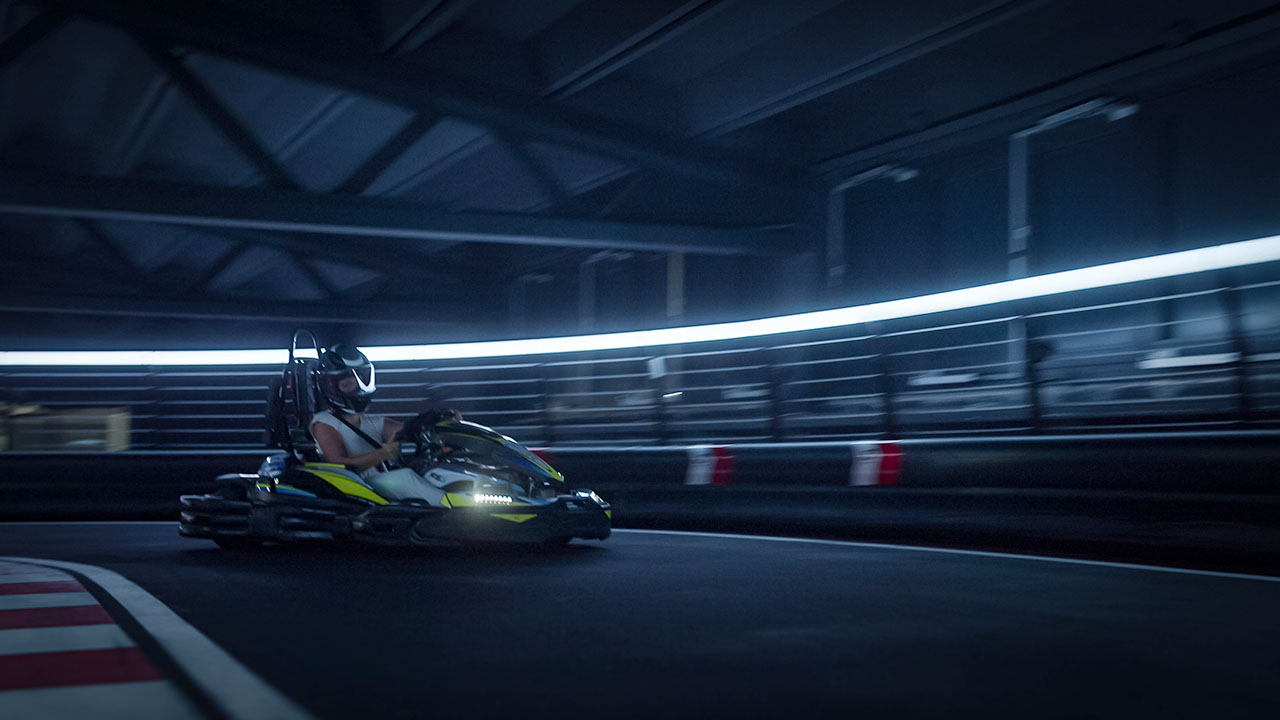
Drivers react by braking hard.
Hard braking causes instability.
Instability causes mistakes.
Mistakes break flow.
If you want to design a go-kart track layout without flow breaking corners, you must solve the physics problem — not just the shape of the corner.
How 360 SPEED+ Technology changes the game
Instead of accepting that one corner must slow everything down, we asked:
What if the corner itself increases grip?
By adding a very small incline — usually just 1 to 2 degrees — we redirect part of the sideways force into the ground.
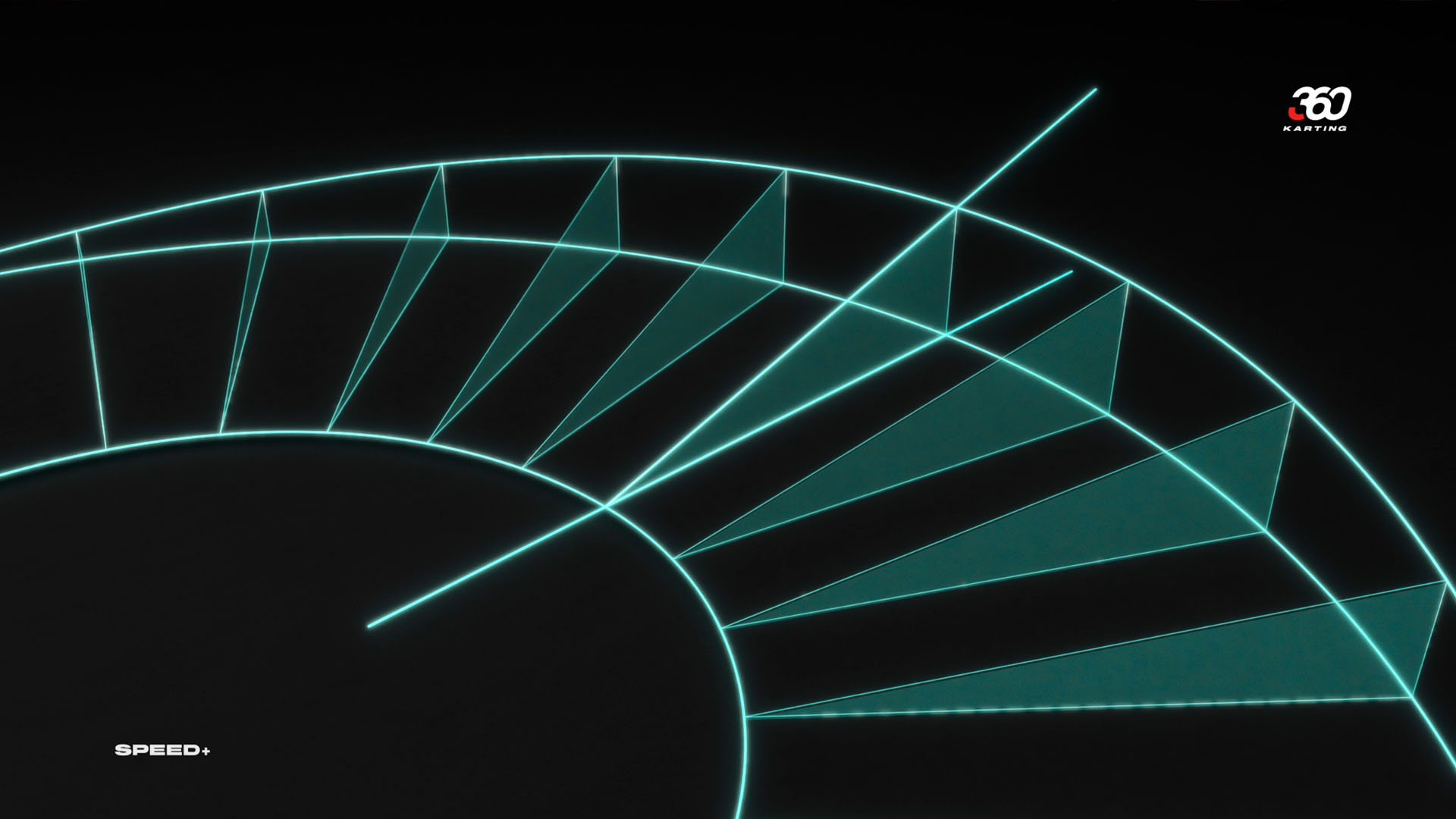
That small change makes a big difference:
✔️ More grip
✔️ More control
✔️ Higher safe entry speed
✔️ Stronger exit acceleration
✔️ Less panic braking
The corner no longer becomes the weak point.
It becomes one of the best parts of the track.
This is 360 SPEED+ Technology!
From drawing tracks to engineering flow
At 360 Karting, we do not just draw layouts.
We engineer them.
Through our integration with SodiKart, we can calculate exactly how a specific chassis behaves in a specific corner.
We measure:
Radius
Speed
Load transfer
Grip gain from inclination

This means no guesswork.
Every SPEED+ corner is based on real data.
What this means for operators and investors
A flow breaking corner increases:
⚠️ Barrier damage
⚠️ Kart repairs
⚠️ Session interruptions
⚠️ Staff workload
⚠️ Customer frustration
SPEED+ reduces:
❌ Collisions
❌ Spinouts
❌ Sudden braking
❌ Skill gap problems
The result:
✅ More laps per session
✅ More sessions per day
✅ Lower maintenance costs
✅ Higher repeat visits
Flow is not a design trend.
It is a business strategy.
Designing for complex buildings
Today’s entertainment spaces are complicated.
Shopping malls.
Urban centers.
Cinemas.
You rarely get a perfect box.
So the question is simple:
Will you accept the compromised corner?
Or will you engineer it properly?
SPEED+ allows you to keep high excitement while keeping the track safe.
✅ Higher controlled speeds.
✅ Smoother transitions.
✅ More confident drivers.
When flow works, everything works
When layout is engineered correctly:
✅ Drivers feel skilled.
✅ Beginners feel confident.
✅ Advanced drivers stay challenged.
✅ Sessions run smoothly.
✅ Staff stress drops.
✅ Revenue stabilizes.
Before you design your next layout
Ask yourself:
Is that complicated corner going to slow your business down?
Or will it elevate it?
Designing a go-kart track layout is about flow.
Because when the track flows, everything else flows too 🚀